
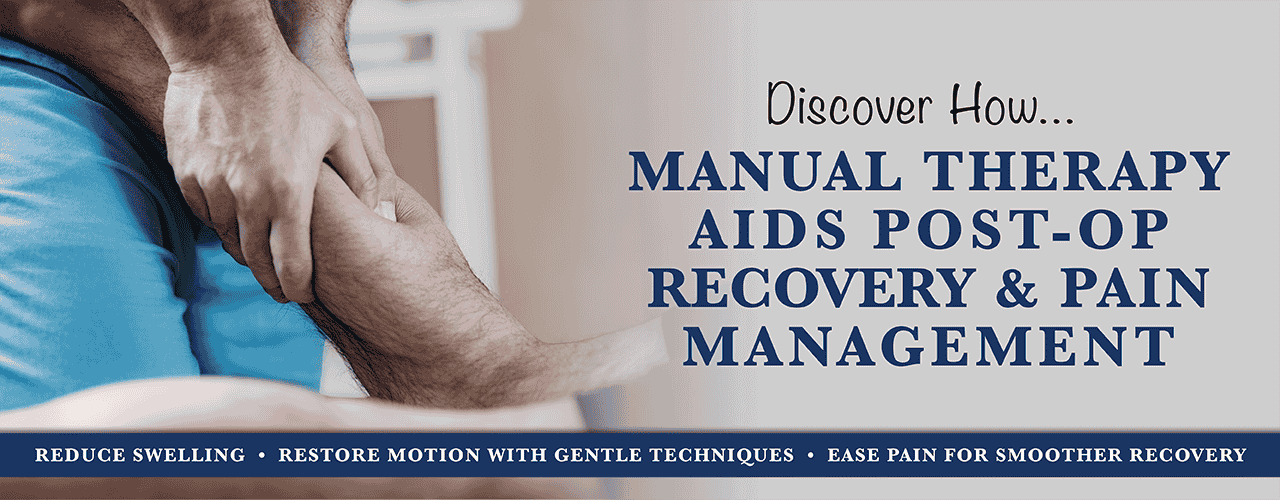
Recovering from surgery can be a long and challenging journey—but with the right support, it doesn’t have to be overwhelming. One powerful and often underappreciated tool in the healing process is manual therapy for post-op recovery. These noninvasive techniques play an essential role in managing stiffness and pain and helping prepare your body for exercise and other more vigorous rehab techniques.
What Is Manual Therapy?
Manual therapy is a hands-on treatment we use at Apex Physical Therapy & Fitness to restore mobility, reduce pain, and support recovery. Rather than relying on machines or devices, our physical therapists use their hands to manipulate joints, soft tissues, and muscles to:
- Improve circulation
- Reduce scar tissue buildup
- Release muscle tightness
- Decrease pain and inflammation
- Promote joint mobility
We incorporate manual therapy for post-op recovery into a comprehensive post-surgical rehabilitation program that blends several different techniques to ensure your surgical site heals and you restore as much strength as possible. For example, we might use manual therapy alongside or in preparation for the following:
- Therapeutic exercises that rebuild strength and mobility
- Neuromuscular re-education that retrains movement patterns
- Functional training that helps patients regain independence in daily activities
Common Manual Therapy Techniques (And What They Can Do For You)
1. Soft Tissue Mobilization
This technique targets muscles, ligaments, and myofascia (the connective tissue around muscles). It helps:
- Break up scar tissue
- Improve blood flow
- Reduce swelling and stiffness
For post-op patients, soft tissue mobilization can ease tension in surrounding areas, especially when surgery causes guarding or overuse in other parts of the body.
2. Joint Mobilization
This technique involves gentle movements of the joint to restore range of motion. It’s especially helpful when surgery affects joints like the shoulder, knee, or hip. Benefits include:
- Improved mobility
- Decreased joint stiffness
- Less pain with movement
We often use joint mobilization early in rehab to help patients regain comfort and confidence in their movement.
3. Myofascial Release
Myofascial release relieves tension in the myofascia, the thin layer of tissue surrounding muscles and organs. If restricted, this tissue can cause pain and mobility impairments throughout the body. Myofascial release:
- Loosens restricted areas
- Reduces pressure on nerves
- Supports better posture and function
After surgery, this type of manual therapy helps reduce lingering pain caused by tight or restricted tissues.
4. Lymphatic Drainage Massage
Post-surgical swelling is common, and this gentle technique helps the body move excess fluid more efficiently. It can:
- Reduce swelling and bruising
- Speed up healing
- Lower the risk of infection
Manual lymphatic drainage is particularly useful after orthopedic surgeries or procedures that affect circulation.
Take the Next Step in Your Recovery
If you’ve recently had surgery and are struggling with pain, stiffness, or limited mobility, you don’t have to face the rehabilitation process alone. Manual therapy for post-op recovery can help you feel better and move more freely, so you can get back to doing what you love.
Contact Apex Physical Therapy & Fitness today to learn how our team of skilled physical therapists can support your post-surgical recovery.
Tags: Manual Therapy, pain management, post-op recovery, rehabilitation techniques
 Print Patient Forms
 Our Location
 FAQ
FAQ